13 February 2026
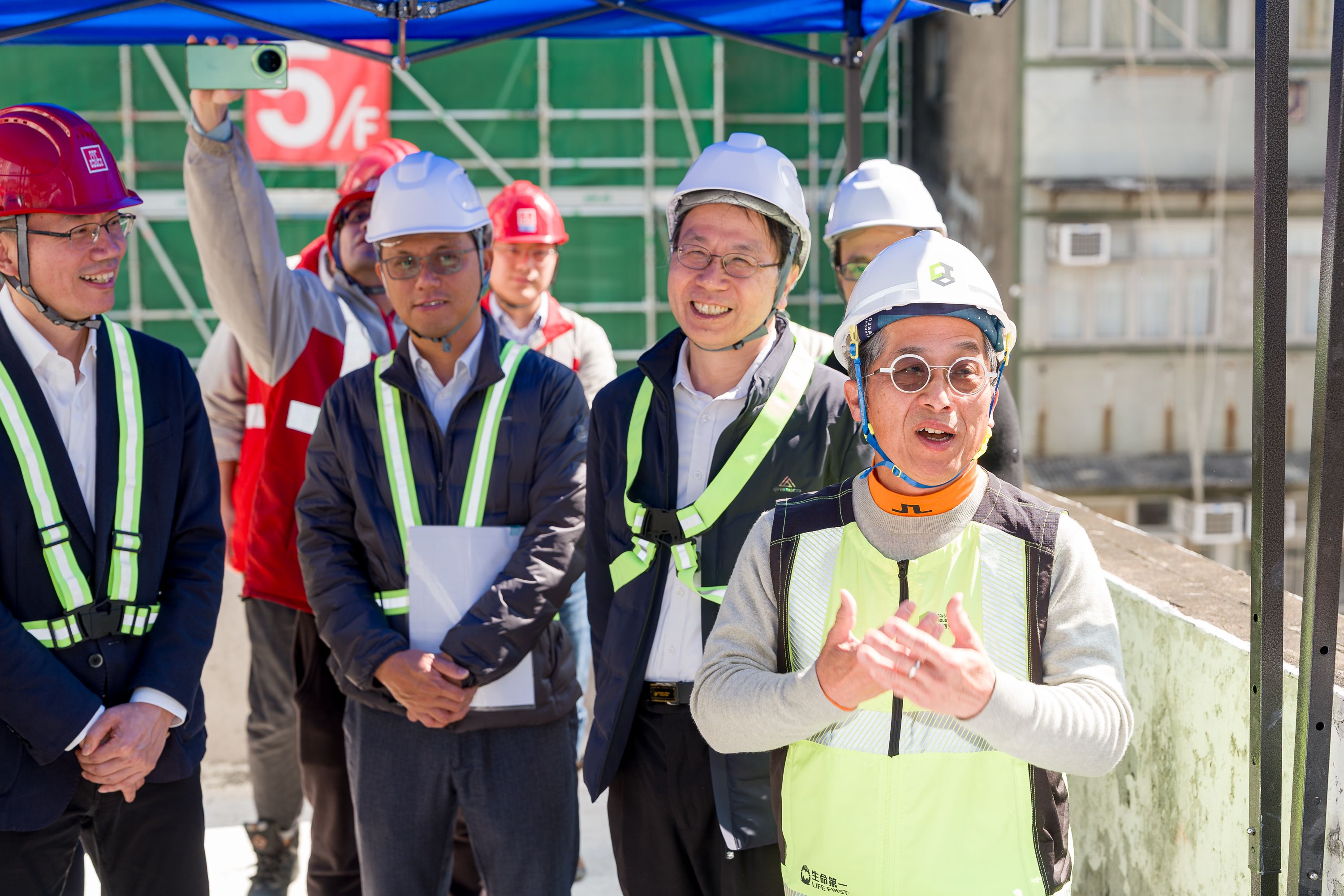
Recently, Professor Thomas Ho On-sing, Chairman of the Construction Industry Council (“CIC”), together with representatives of the Buildings Department and industry experts, paid a special visit to the integrated residential development project at 16–20 Temple Street, Yau Ma Tei, undertaken by Infinity Consulting (Asia) Limited (“Infinity Consulting”) (the “Temple Street Project”), to conduct an on-site inspection of the innovative application of Modular Integrated Construction (“MiC”) technology. Professor Ho commended the project as “a benchmark MiC project for private residential developments in Hong Kong”, marking a breakthrough advancement of MiC technology in the private residential sector.
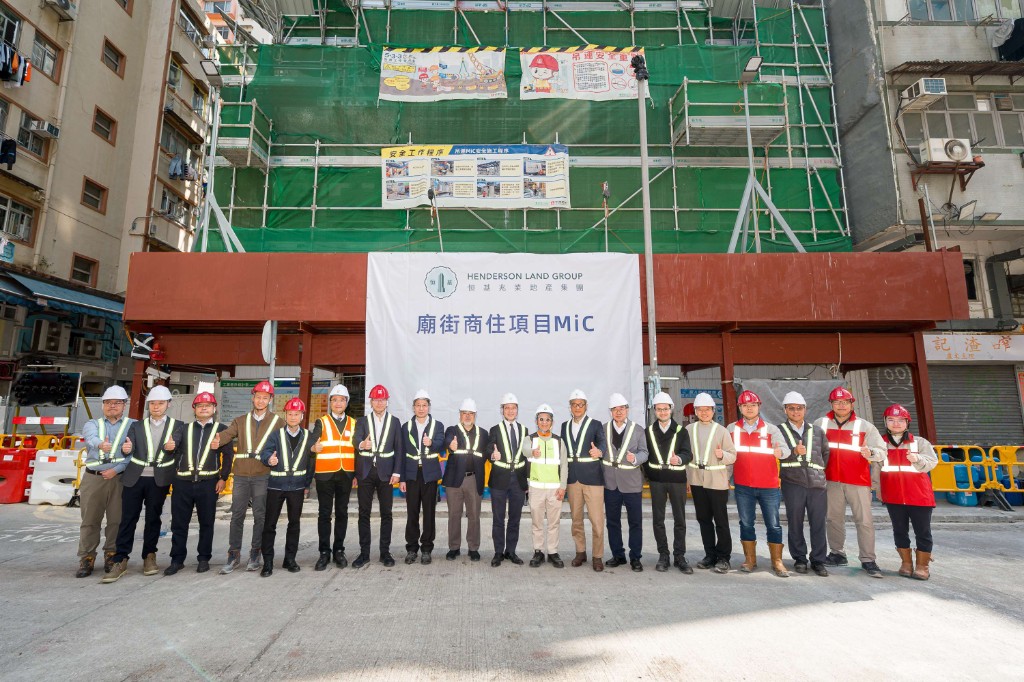
The delegation was led by Professor Thomas Ho, Chairman of the CIC, and included authoritative industry figures such as Dr. Lo Wai-kwok, former senior engineer in Hong Kong and member of the CPPCC Hong Kong District Committee, and architect Chan Muk-man. Representatives including Mr. Yu Wai-wai, General Manager of Property Planning Department (I) of the project developer Henderson Land Development Company Limited, and Mr. Huang Jiang, Vice President of Infinity Consulting (Asia) Limited, received the delegation and provided a detailed briefing on the project’s challenges and innovations.
Located in the bustling urban area of Kowloon and adjacent to the renowned Temple Street cultural landmark, the Temple Street Project is surrounded by night markets, restaurants and hawker stalls, with frequent commercial activities in the vicinity. By adopting Modular Integrated Construction technology, the project significantly reduces construction waste, dust and construction noise, thereby achieving low-impact construction for the surrounding community.
Hong Kong’s First Full-MiC Private Residential Project
As Hong Kong’s first private residential project to adopt full Modular Integrated Construction (“MiC”) for its residential floors, the Temple Street Project is divided into upper and lower MiC zones. Its highly standardized layout and repeatable unit design have significantly improved construction and installation efficiency. More than 95% of the works for each module are completed in the factory, including prefabricated wall panels, staircases, and integrated architectural and building services works, truly realizing the “Mi-infinity” concept and substantially reducing on-site workload.
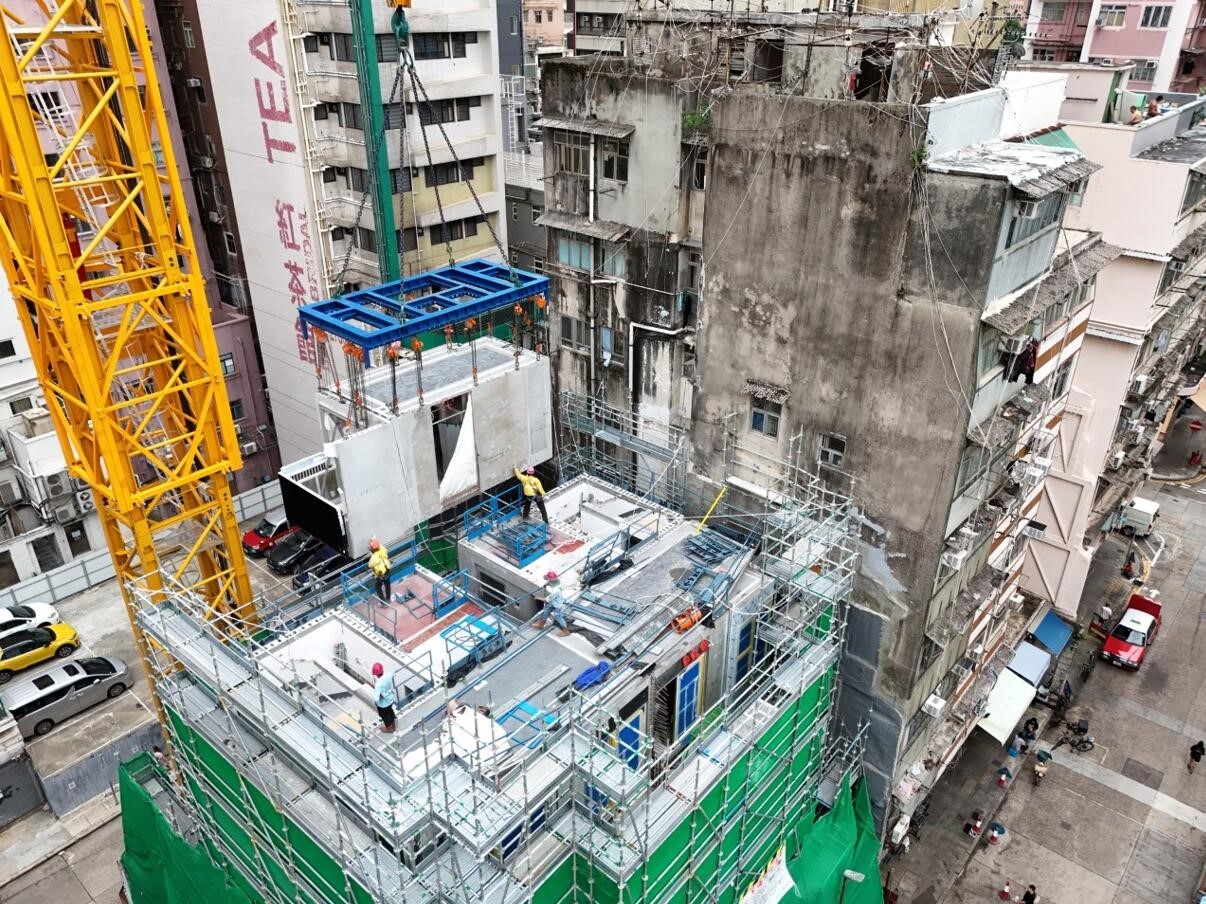
Empowered by Technology to Overcome an Extremely Challenging Construction Environment
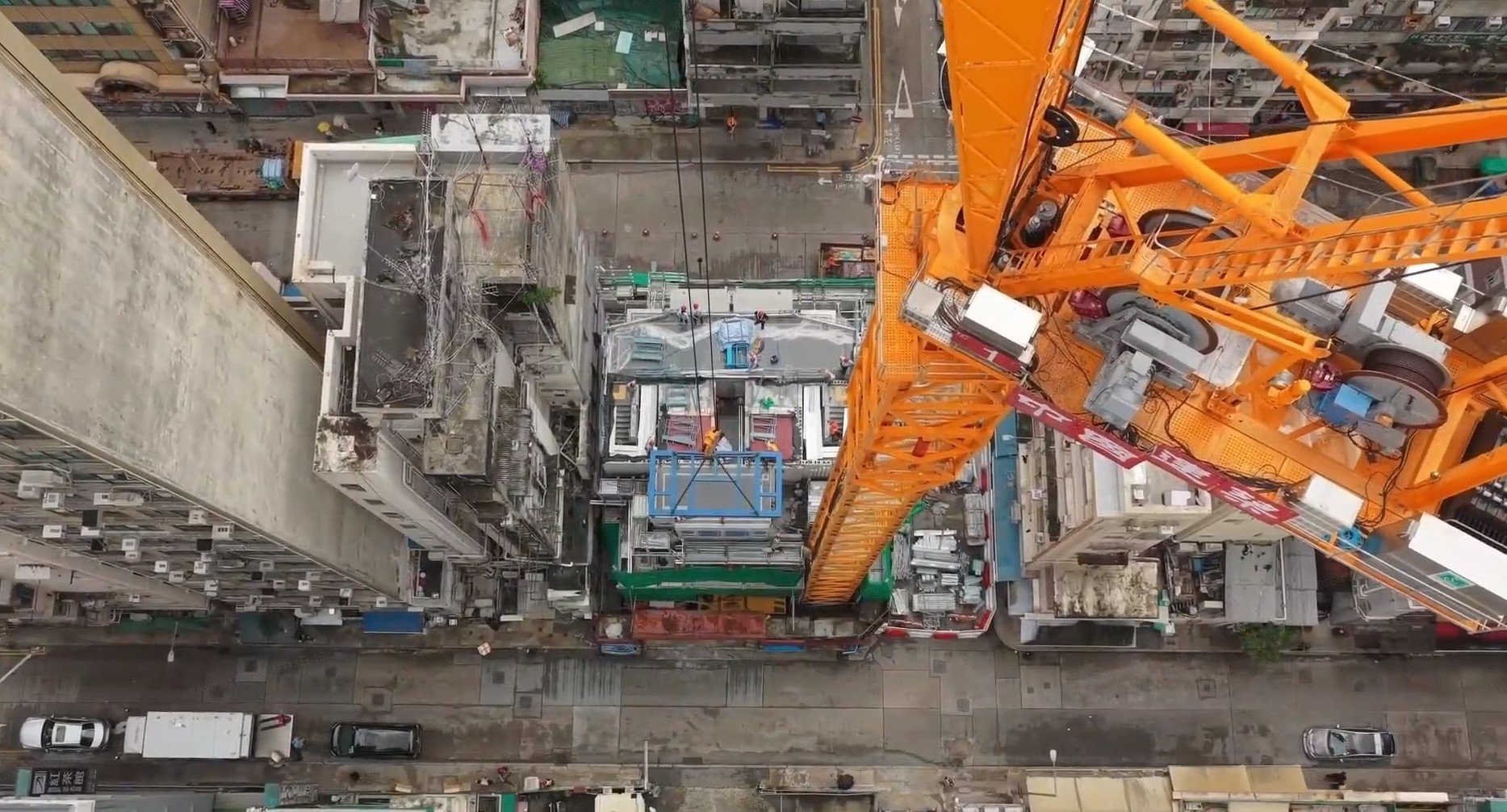
The project site covers an area of approximately 209.4 square metres. The main building is only 0.9 metres away from the adjacent buildings and is located next to a Tin Hau Temple with a history of 161 years. With extremely limited construction space, the use of large machinery is highly constrained. To address this, the project adopted a specially customized tower crane with a maximum lifting capacity of 50 tonnes, capable of hoisting MiC modules weighing approximately 39 tonnes. Real-time tracking and transportation scheduling were also deployed to enhance logistics efficiency. To date, a total of 143 MiC modules have been transported through the urban area and hoisted on site, without affecting nearby traffic or commercial activities.
The project fully applies the concepts of “Design for Assembly” and “Design for Buildability” to coordinate module planning and connection details, thereby minimizing construction deviations. Through the use of digital tools such as BIM and 3D scanning, the module installation tolerance has been controlled within 4 millimetres, providing reliable assurance for module stacking and façade alignment.
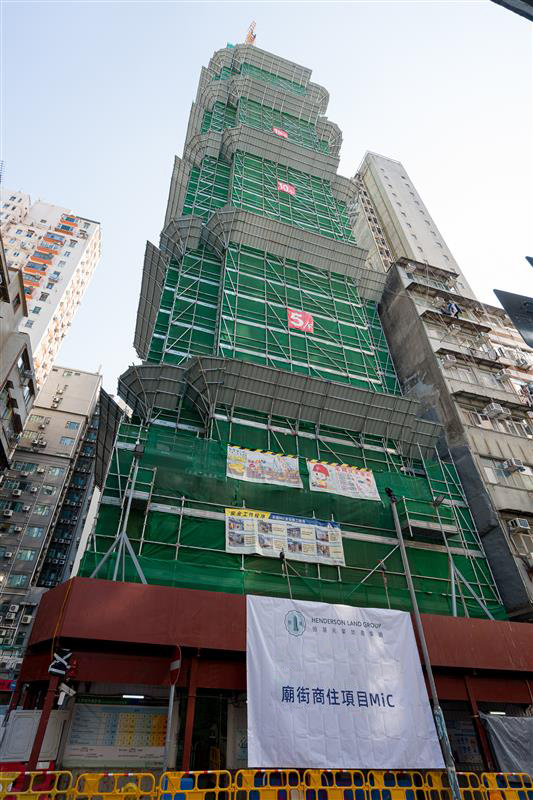
Protecting Urban Livelihoods with New Quality Productive Forces
Despite strict road restrictions allowing works only from 7:00 a.m. to 4:00 p.m. each day, the project achieved the “China Construction speed” of completing one floor every three days through the use of Modular Integrated Construction (“MiC”) within the limited nine-hour daily road work window. The project team has consistently returned the road to the public punctually at 4:00 p.m. every afternoon, ensuring that the livelihoods of nearby hawkers remain unaffected. By fully leveraging MiC as a form of new quality productive forces, the project not only pursues excellence and refinement in engineering, but also safeguards the everyday vitality of the city, achieving disturbance-free construction and bringing construction technology back to its people-oriented purpose.
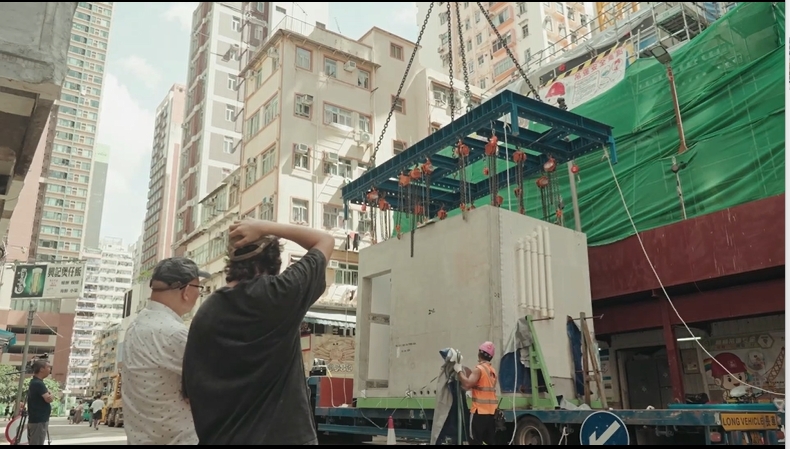
During the visit, Professor Thomas Ho, Chairman of the CIC, stated: “The Temple Street Project demonstrates how early design integration and the outstanding performance of MiC can enhance productivity, quality and environmental performance, while supporting efficient urban development. The project provides a practical reference for similar urban renewal works and strengthens the industry’s confidence in MiC as a transformative construction method.”
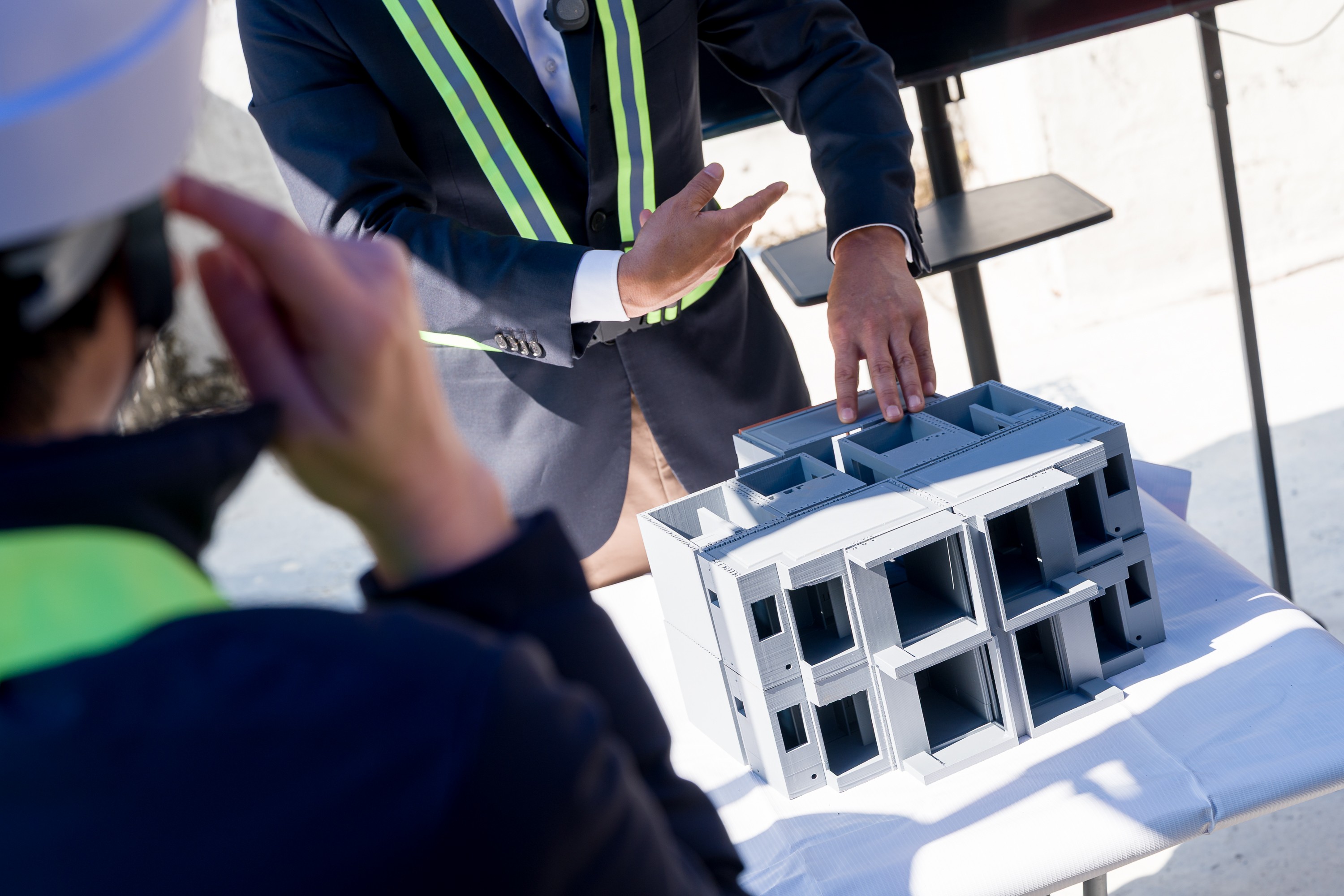
The visit and recognition by industry authorities not only encouraged the Temple Street Project team, but also further promoted the application of MiC technology in Hong Kong’s private residential sector. Infinity Consulting will continue to focus on innovative construction technologies, driving industry progress through more benchmark projects and contributing to Hong Kong’s urban development. The project is expected to be completed in 2026 and will provide 48 fully fitted residential units upon completion.